
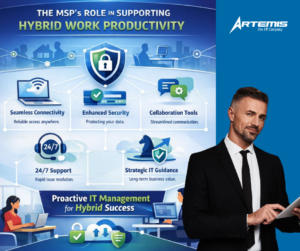
The MSP’s Role in Supporting Hybrid Work Productivity
The rise of hybrid work has transformed how businesses operate, blending in-office and remote workflows. For organizations navigating this shift, maintaining productivity, security, and collaboration can be challenging. This is where a Managed Service Provider (MSP) plays a critical role. By leveraging proactive IT management, businesses can empower their teams, reduce downtime, and maximize efficiency in a hybrid work environment.
1. Ensuring Seamless Connectivity
Hybrid work relies heavily on reliable network access. MSPs implement secure and efficient connectivity solutions, ensuring employees can collaborate from any location. With proactive IT management, MSPs monitor network performance in real-time, quickly identifying and resolving potential issues before they disrupt productivity.
2. Enhancing Security Across Hybrid Workforces
Hybrid environments increase exposure to cyber threats. MSPs deploy comprehensive security strategies, including endpoint protection, multi-factor authentication, and regular software updates. Through proactive IT management, vulnerabilities are identified and mitigated before they become serious problems, keeping sensitive data safe whether employees are in-office or remote. The latest insights on remote work security can be found at the National Cybersecurity Alliance.
3. Streamlining Collaboration Tools
Effective hybrid work depends on seamless communication. MSPs implement and manage collaboration platforms such as Microsoft Teams, Slack, and cloud-based project management tools. With proactive IT management, MSPs ensure these platforms remain updated, integrated, and fully supported, enabling employees to collaborate without interruption.
4. Reducing Downtime with 24/7 Support
Unexpected technical issues can significantly impact hybrid work productivity. MSPs provide 24/7 monitoring and support, detecting problems early through proactive IT management. This rapid response ensures minimal downtime, allowing employees to stay focused on business-critical tasks.
5. Building Long-Term Value with Managed Services
Beyond troubleshooting, MSPs deliver strategic value. From planning IT upgrades to optimizing workflows, a skilled MSP helps businesses achieve operational efficiency while controlling costs. Businesses that invest in managed services benefit from a proactive approach that prevents issues, increases productivity, and enhances employee satisfaction.
Hybrid work is here to stay, and businesses must adapt to maintain productivity, security, and collaboration. By partnering with a trusted MSP, organizations gain access to proactive IT management, ensuring smooth operations, minimal downtime, and long-term growth. Investing in managed services is no longer optional. It’s a strategic necessity for hybrid work success.