
Downtime affects every business. When systems go offline, operations slow, employees are blocked, and customers feel the impact immediately.
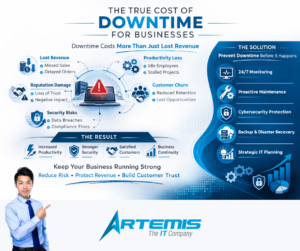
What many organizations underestimate is how far business downtime costs extend beyond lost revenue. Downtime impacts productivity, damages reputation, weakens customer trust, and increases long term operational risk. Understanding the true cost is the first step toward preventing it.
The Direct Financial Impact of Downtime
When systems go offline, revenue generating activities stop. Sales cannot be processed. Support teams cannot assist customers. Internal operations grind to a halt.
Business downtime costs include lost revenue, emergency IT repair fees, overtime labor, missed deadlines, and potential contractual penalties. These expenses often occur all at once and without warning.
Downtime rarely ends when systems come back online. The financial ripple effects often continue for days or weeks.
Productivity Losses Across the Organization
Downtime disrupts workflows across departments. Employees wait for systems to be restored or resort to inefficient manual processes.
Productivity losses include idle time, delayed projects, increased errors, and mounting frustration. Over time, recurring downtime impacts morale and reduces overall efficiency.
Proactive system monitoring and maintenance significantly reduce these interruptions.
Reputational Damage and Brand Perception
Customers expect reliability. Repeated downtime sends the opposite message.
Service disruptions can lead to missed communications, delayed deliverables, and inconsistent experiences. Even a single major outage can damage brand perception and create doubt about reliability.
Rebuilding reputation costs far more than preventing downtime.
Customer Trust and Retention at Risk
Customer trust is fragile. Downtime tests it.
When systems are unavailable, customers may experience delays, errors, or lost data. Over time, this erodes confidence and increases churn.
Reliable systems support consistent service delivery, which strengthens customer relationships and long term retention.
Security Risks Increase During Downtime
Downtime events often expose security gaps. Failed updates, outdated systems, and rushed recovery efforts increase vulnerability.
Security incidents frequently occur alongside outages, compounding business downtime costs with regulatory risk and data loss.
Why Reactive IT Increases Downtime Costs
Reactive IT addresses problems after they occur. This approach leads to repeated outages, unpredictable expenses, and constant firefighting.
Without proactive monitoring, maintenance, and planning, small issues grow into major disruptions. Over time, reactive support drives higher business downtime costs and operational instability.
How Managed IT Services Reduce Downtime
Key elements include continuous monitoring, regular system maintenance, cybersecurity protection, backup and disaster recovery testing, and strategic IT planning.
Together, these services minimize disruptions and reduce the overall impact of outages.
The Long Term Value of Reducing Downtime
Reducing downtime delivers measurable business value.
Organizations benefit from improved productivity, stronger security, predictable IT costs, and greater confidence in their technology environment. Downtime prevention supports growth, scalability, and operational resilience.
Reducing Business Downtime with Artemis IT
Artemis IT helps organizations reduce business downtime costs through proactive managed services designed to maintain system health and availability.
Our services include continuous monitoring, cybersecurity protection, backup and disaster recovery planning, cloud and remote work support, and strategic IT consulting.
By partnering with Artemis IT, businesses gain reliable technology and the confidence to focus on growth instead of outages.